A Pattern the World Can’t Ignore is unfolding in real time. Across speeches, interviews, and policy signals, the words of Donald Trump have shifted—sometimes subtly, sometimes dramatically.
This isn’t a minor inconsistency. It’s a recurring pattern that has caught the attention of analysts, diplomats, and observers worldwide.
At the center of this pattern lies a high-stakes geopolitical environment shaped by tensions involving Iran, Israel, and the United States.
Understanding this phenomenon requires more than surface-level observation. It demands a deeper look into strategy, pressure, and the unpredictable nature of modern conflict.
Table of Contents
The Original Narrative: Confidence and Control
At the outset of the 2026 conflict, the messaging was bold and decisive.
Trump’s early statements emphasized speed, precision, and control. The operation was framed as a short-term mission designed to neutralize threats and stabilize the region quickly.
This approach echoed long-standing strategic thinking associated with Benjamin Netanyahu—a belief that decisive action could reshape the balance of power.
The expectations were clear:
- Rapid military success
- Disruption of Iran’s leadership
- Immediate strategic advantage
But events on the ground began to challenge this narrative.
The Reality Shift: When Strategy Meets Resistance
Despite initial reports of successful strikes on key military and strategic targets, the expected outcome did not materialize.
Iran’s system did not collapse.
Instead, it adapted.
This resilience stems from Iran’s layered governance and military structure. Unlike centralized systems that rely heavily on a single chain of command, Iran operates through multiple interconnected layers. When one segment is disrupted, others continue to function.
This adaptability transformed what was expected to be a short operation into a prolonged and complex conflict.
And with that transformation came a shift in messaging—a pattern the world can’t ignore.
Why Trump Keeps Changing His Words: Breaking Down the Pattern
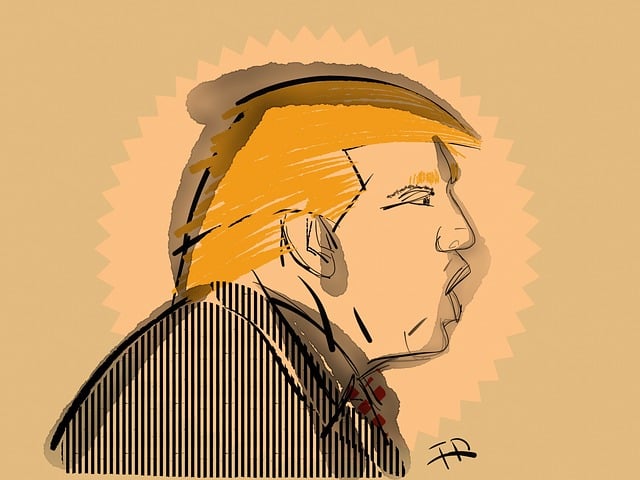
The evolving situation has led to noticeable changes in Trump’s statements. These shifts are not random; they reflect deeper dynamics at play.
1. Strategic Recalibration
As initial assumptions proved inaccurate, adjustments became necessary. Changing words often signals changing strategies.
2. Managing Public Expectations
In times of uncertainty, leaders reshape narratives to maintain confidence and control. Messaging becomes a tool for stability.
3. Strategic Ambiguity
Unclear or shifting statements can create uncertainty for opponents. This ambiguity can serve as a tactical advantage.
4. External Influences
Global alliances, intelligence updates, and diplomatic pressures all contribute to evolving communication.
Together, these factors form a pattern the world can’t ignore—a cycle of statement, outcome, and revision.
Global Consequences: When Words Meet Reality
This pattern is not confined to political discourse—it has tangible global effects.
One of the most critical pressure points is the Strait of Hormuz, a vital corridor for global energy supply. Any instability here reverberates across the world.
The consequences have been significant:
- Disruptions in global oil markets
- Increased shipping risks and insurance costs
- Widespread flight cancellations
Major hubs like Dubai International Airport have experienced operational strain, highlighting the interconnected nature of modern systems.
This is where rhetoric meets reality—and where a pattern the world can’t ignore becomes impossible to dismiss.
The Silent Influence of Global Powers
While public attention remains focused on the primary actors, other global powers play a quieter role.
China and Russia have maintained calculated positions, offering indirect support while avoiding direct confrontation.
Their involvement adds complexity and unpredictability to the situation.
This layered dynamic reinforces the idea that global conflicts are no longer isolated—they are interconnected systems of influence.
A Shift in Warfare: Beyond Traditional Strategies
The current conflict highlights a broader transformation in military and political strategy.
Traditional approaches—focused on rapid strikes and leadership removal—are proving less effective against resilient, decentralized systems.
Key lessons emerging from this shift include:
- Endurance is becoming more critical than speed
- Systems designed for resilience outperform rigid structures
- Information and perception are as important as military action
In this context, changing words may reflect the challenge of adapting to a rapidly evolving landscape.
Once again, a pattern the world can’t ignore emerges—not just in communication, but in strategy itself.
Conclusion: Understanding the Pattern
So, what explains the repeated changes in Trump’s statements?
The answer lies in the intersection of strategy, uncertainty, and adaptation.
What began as a controlled narrative encountered an unpredictable reality. As conditions changed, so did the messaging.
This is not simply inconsistency—it is a reflection of a complex and evolving situation.
A Pattern the World Can’t Ignore is not just about one leader’s words. It is about how power operates in uncertain times, how strategies evolve under pressure, and how global dynamics shape communication.
In a world where events move faster than ever, words are no longer fixed—they are fluid, responsive, and deeply strategic.
FAQs
1. What does “A Pattern the World Can’t Ignore” refer to?
It refers to the repeated and noticeable shifts in political statements—particularly Trump’s—reflecting changing realities and strategies.
2. Why does Trump keep changing his words?
The changes likely result from evolving geopolitical conditions, strategic recalibration, and the need to manage public perception.
3. Did the initial strategy in the conflict succeed?
While early actions achieved tactical results, the broader objective of rapid systemic change did not occur.
4. How has Iran responded to the situation?
Iran demonstrated resilience through its layered command structure, maintaining stability and continuing operations despite disruptions.
5. What role do China and Russia play?
They provide indirect support and influence, adding complexity to the geopolitical landscape without direct involvement.
6. Why is this situation globally significant?
Because it affects energy routes, economic stability, and international relations, making it a matter of global concern.
For more in-depth analysis, strategic insights, and global coverage, stay connected with Documentary Times—where complex realities are explored with clarity and depth.