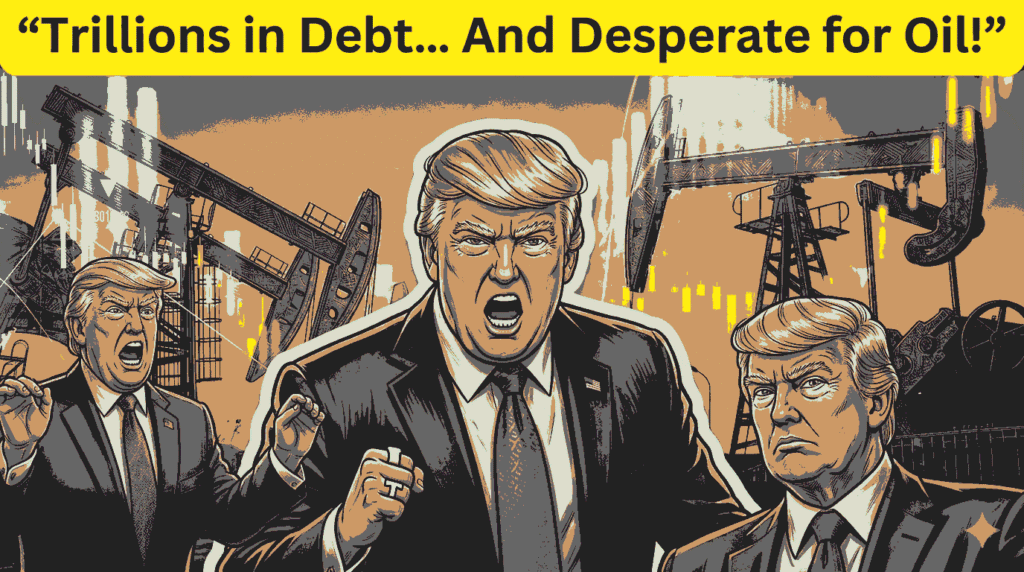
Iran has publicly declared that the US is desperate for Middle Eastern oil, a claim rooted in decades of geopolitical tension. With America’s $34 trillion national debt and a long history of military involvement in the region, Tehran portrays Washington as financially vulnerable and strategically constrained.
The Persian Gulf, particularly the Strait of Hormuz, is a critical chokepoint, handling nearly 20% of the world’s oil shipments daily. Any disruption here could spark a global economic crisis. This article explores the strategic, economic, and military implications of Iran’s accusation, highlighting how it shapes the broader U.S.–Iran rivalry.
Table of Contents
Economic Drivers: Debt and Dependence
When Iran claims the US is desperate for Middle Eastern oil, it emphasizes a combination of fiscal and strategic pressures on Washington:
- $34 trillion national debt, limiting U.S. fiscal flexibility
- Dependence on stable oil supplies to maintain economic growth
- Pressure to secure shipping routes and global energy markets
Iran frames these factors as driving U.S. foreign policy, military deployments, and naval patrols in the Gulf. By highlighting America’s reliance on Middle Eastern oil, Tehran portrays Washington as overextended and vulnerable.
The Strait of Hormuz: A Strategic Chokepoint
The Strait of Hormuz is central to understanding why Iran claims the US is desperate for Middle Eastern oil. Key points include:
- A narrow waterway critical for global energy security
- Nearly 20% of the world’s oil passes through it daily
- Even minor disruptions could spike oil prices worldwide
This strategic chokepoint gives Iran leverage in regional diplomacy and military planning. U.S. naval presence and carrier strike groups in the Gulf reflect both a desire to secure trade and the consequences of dependence on Middle Eastern energy.
Military Posturing: Asymmetric and Conventional Tactics
Iran’s Strategic Approach
Unable to match the U.S. in conventional firepower, Iran relies on:
- Ballistic missiles and underground launch facilities
- Drone programs for surveillance and attack
- Fast-attack naval craft capable of disrupting shipping lanes
These asymmetric strategies allow Iran to project power without engaging in direct confrontation, a factor that underscores the US desperate for Middle Eastern oil narrative.
U.S. Military Presence
The United States counters with:
- Carrier strike groups patrolling the Gulf
- Regional airbases and missile defense systems
- Security partnerships with Gulf nations
These deployments are framed as deterrence, but Tehran interprets them as evidence of U.S. economic and strategic vulnerability.
Sanctions and Economic Leverage
Iran’s accusations are also tied to economic warfare. Sanctions aim to restrict:
- Iranian oil exports
- Financial institutions connected to the government
- Military-linked entities
While sanctions pressure Iran, Tehran frames U.S. dependence on energy resources as a weakness. The combination of sanctions, debt, and oil reliance reinforces the narrative that the US is desperate for Middle Eastern oil and willing to take strategic risks to secure it.
Global Implications of Escalation
Any miscalculation in the Persian Gulf could have far-reaching consequences:
- Oil price spikes, affecting global markets
- Disrupted shipping routes, impacting international trade
- Regional escalation, potentially drawing allies into conflict
- Financial instability, highlighting U.S. economic vulnerability
Iran’s statement is not mere rhetoric; it signals a calculated awareness of global interdependencies and the leverage inherent in controlling energy chokepoints.
A Calculated Standoff
Despite decades of hostility, direct conflict has been avoided. The US is desperate for Middle Eastern oil, according to Tehran, but both nations rely on a complex system of:
- Proxy engagements
- Targeted military displays
- Economic pressure and sanctions
- Strategic signaling
This delicate balance demonstrates the fragility of global energy and geopolitical security.
Why This Moment Matters
The Persian Gulf remains a critical flashpoint. Iran’s narrative highlights Washington’s strategic dependence on Middle Eastern energy, shaping international diplomacy and military posturing. Minor incidents could ripple far beyond the region, impacting global oil prices, financial stability, and energy security worldwide.
Frequently Asked Questions (FAQ)
Why does Iran say the US is desperate for Middle Eastern oil?
Tehran argues that America’s economic vulnerability, combined with reliance on Gulf oil, drives U.S. foreign policy and military presence in the region.
What makes the Strait of Hormuz so important?
It handles nearly 20% of global oil shipments daily. Any disruption could trigger energy shortages and global market instability.
How does U.S. debt affect its Middle East strategy?
High national debt limits Washington’s fiscal flexibility and influences strategic decisions, including military deployments and diplomatic engagement.
Could tensions escalate into war?
While risks exist, both nations have historically avoided direct large-scale conflict, relying instead on proxy operations, sanctions, and strategic deterrence.
How do sanctions impact this dynamic?
Sanctions aim to limit Iran’s influence, but they also reinforce Tehran’s narrative that the US is desperate for Middle Eastern oil and willing to take risky strategic steps.
Conclusion
Iran’s statement that the US is desperate for Middle Eastern oil crystallizes decades of economic, military, and strategic rivalry. The Persian Gulf is a fragile balance of power where naval deployments, sanctions, and energy security intersect. Any misstep could reverberate globally, affecting oil prices, trade, and international relations.