For decades, supermassive black holes have been portrayed as cosmic monsters—mindless destroyers that tear apart stars, swallow entire worlds, and leave nothing but darkness in their wake. That narrative, according to groundbreaking new research, may be due for a radical rewrite.
A team of astrophysicists led by Barry McKernan at the City University of New York has published a paper on the arXiv preprint server that challenges everything we thought we knew about planet formation. Their conclusion is as astonishing as it is elegant: planets inside black holes—or more precisely, within the cold, dusty rings that surround them—may be among the most common worlds in the universe. These are truly the universe’s biggest hidden nurseries.
Welcome to the strange and violent birth of planets inside black holes.
Table of Contents
The Old Story: Planets Form Only Around Stars
The traditional model of planet formation is beautiful in its simplicity. Around a young star, a swirling disk of gas and dust—called a protoplanetary disk—slowly coalesces. Dust grains bump into each other, stick together, and grow. Centimeters become meters. Meters become kilometers. Over millions of years, planetesimals form, then protoplanets, and finally fully fledged worlds.
Our own Earth was born this way. So was Jupiter. So, presumably, are the thousands of exoplanets discovered by the Kepler and James Webb telescopes.
In this model, stars are the essential engines of creation. No star, no disk. No disk, no planets.
Black holes, by contrast, were cast as the villains. They destroy. They consume. They mark the end of worlds, not their beginning. The very idea of planets inside black holes would have been dismissed as science fiction. No one imagined they could be the universe’s biggest hidden nurseries.
But nature, it seems, had other plans.
The New Discovery: Hidden Nurseries Around Black Holes
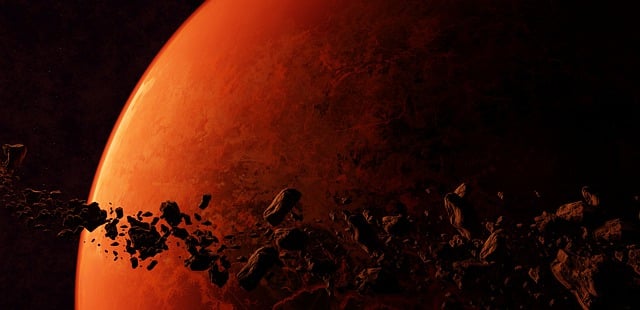
The breakthrough began when McKernan and his colleagues turned their attention to active galactic nuclei—the supermassive black holes at the centers of galaxies that are actively consuming surrounding material.
These AGNs are surrounded by complex structures: an inner accretion disk of superheated plasma, and farther out, a colder, denser region known as the torus. The torus is a donut-shaped ring of gas and cosmic dust, extending up to 100 light-years across.
For years, astronomers viewed the torus simply as a reservoir of fuel for the black hole—material waiting to be devoured. But McKernan’s team noticed something extraordinary.
The conditions in the outer torus are eerily similar to those in protoplanetary disks around stars.
Temperatures are comparable. Densities are comparable. The basic ingredients—hydrogen, helium, and heavier dust grains—are the same.
If planets inside black holes could form anywhere, the researchers reasoned, the torus was the most likely birthplace. And if they were right, these tori would be the universe’s biggest hidden nurseries.
The Torus: A Cosmic Cradle Wrapped Around a Monster
To test this hypothesis, the team built a computer model of a magnetized black hole disk. They fed it real data on temperatures, gas composition, magnetic fields, and dust density in the outer torus region.
The results were remarkable.
| Feature | Protoplanetary Disk (Around Star) | AGN Torus (Around Black Hole) |
|---|---|---|
| Temperature | ~50–200 K (cold outer region) | ~50–200 K (outer torus) |
| Dust composition | Silicates, carbon, ices | Silicates, carbon, ices |
| Density | Moderate | Comparable to moderate regions |
| Radiation environment | Low to moderate | High near inner disk, lower in outer torus |
| Gravitational field | Dominated by central star | Dominated by supermassive black hole |
The model showed that despite—or perhaps because of—the extreme environment, planets inside black holes can indeed form. And not just a few.
According to the paper: “Our approximate model suggests that AGN dust tori host the largest populations of planets in the universe.”
Let that sink in. The largest populations of planets in the universe. Not around stars. Not around brown dwarfs. The research suggests that planets inside black holes may outnumber all other planets combined. The tori are truly the universe’s biggest hidden nurseries.
Can Planets Inside Black Holes Form Faster Than Normal?
The difference isn’t just in quantity—it’s in speed.
In a typical protoplanetary disk, planet formation takes millions of years. Dust grains slowly drift, collide, and stick. Gravity is gentle. Growth is gradual.
In the torus of an AGN, the situation is radically different.
The intense gravitational field of the supermassive black hole accelerates everything. Material orbits at tremendous speeds. Collisions are more frequent. Dust clumps together faster.
According to the McKernan team’s calculations, planets inside black holes can grow up to 100 times faster than their counterparts around ordinary stars.
A world that might take 10 million years to form around a star could emerge in just 100,000 years in the torus of an AGN—one of the universe’s biggest hidden nurseries.
This rapid growth has profound implications. It means that AGN tori could produce Jupiter-sized worlds—and even larger objects—on timescales that are astronomically short. The formation of planets inside black holes is not a slow, patient process. It is a violent, accelerated race to mass.
From Worlds to Stars: The Core Accretion Channel
Some of these newly formed planets inside black holes don’t stop growing. They keep accreting gas and dust, becoming more and more massive.
And at a certain point—when they reach roughly 80 times the mass of Jupiter—something remarkable happens.
They ignite.
Nuclear fusion begins in their cores. A planet becomes a star.
The paper describes this process as a “core accretion channel for star formation.” This is a radical departure from the standard model, in which stars form directly from the gravitational collapse of gas clouds. Here, stars are born from the cores of planets inside black holes that simply kept growing.
As the authors write: “Vigorous accretion can occur, leading to objects with stellar masses.”
In other words, the torus around a supermassive black hole isn’t just a planetary nursery. It is also a stellar nursery—one that operates on an entirely different principle than anything we have observed before. The boundary between planets inside black holes and stars becomes blurred. Even the universe’s biggest hidden nurseries can produce stars.
Exotic Objects Unlike Anything We’ve Seen
Not every object formed in the torus fits neatly into our existing categories.
The paper predicts the existence of exotic massive objects made mostly from dust. These aren’t gas giants like Jupiter, nor rocky worlds like Earth. They are something else entirely.
Imagine a planet-sized object with almost no atmosphere. No geological layers. No iron core. Just compressed cosmic dust, held together by gravity and the relentless pressure of the AGN environment.
These objects would be dark—almost invisible. They would reflect very little light. They would not emit significant radiation. They would simply drift through the torus, massive but nearly undetectable.
“We have nothing like this in our own solar system,” the researchers note. “These are truly alien worlds.”
If they exist, they could be among the most common large objects in the universe—hidden in plain sight alongside planets inside black holes in every active galaxy. They add another layer of mystery to the universe’s biggest hidden nurseries.
A Violent Fate: Orphans, Rogues, and Destruction
The birth of planets inside black holes is not a gentle process. And their lives are rarely peaceful.
The torus is a crowded environment. Millions of planets, planetesimals, and dust clumps orbit the same black hole at high speeds. Collisions are not rare. They are inevitable.
Some collisions destroy the objects involved, blasting them back into dust and gas.
Others produce larger planets—but at a cost. The debris from violent impacts can spiral inward toward the black hole, feeding the accretion disk and increasing radiation output.
Many of the planets inside black holes do not survive their own birthplaces.
Some are flung outward by gravitational interactions, ejected from the torus entirely. These become rogue planets—worlds without a star, without a black hole, drifting alone through interstellar or intergalactic space. These orphans were once planets inside black holes. Now they belong to nowhere.
Others spiral inward, falling toward the accretion disk and eventually crossing the event horizon. They are torn apart by tidal forces, atom by atom, feeding the very black hole that gave them life.
As one researcher put it: “The black hole gives with one hand and takes with the other.” Even the universe’s biggest hidden nurseries are also killing fields.
How Scientists Hope to Detect Planets Inside Black Holes
If planets inside black holes are so abundant, why haven’t we seen them yet?
The answer is distance and darkness. AGN tori are extremely far away—millions to billions of light-years from Earth. And the planets themselves are tiny compared to the vast scales of the torus.
However, several observational strategies are already being discussed and planned.
| Strategy | What It Would Detect | Feasibility |
|---|---|---|
| Microlensing surveys | Rogue planets ejected from AGN tori | Moderate (requires wide-field surveys) |
| JWST infrared imaging | Dust clumps and gaps in AGN tori | High (already planned for nearby AGNs) |
| X-ray variability | Planets transiting the accretion disk | Low (requires perfect alignment) |
| ALMA radio observations | Kinematic disturbances in the torus | Moderate (high-resolution ALMA campaigns) |
| Spectroscopic signatures | Chemical anomalies from planet formation | Low-Medium (requires extreme sensitivity) |
The James Webb Space Telescope (JWST) is already capable of probing the dusty tori of nearby AGNs. If it finds evidence of planet-sized clumps—or the exotic dust-dominated objects predicted by the model—it would confirm that planets inside black holes are not just theoretical. It would prove that the universe’s biggest hidden nurseries are real.
The authors are clear-eyed about the work ahead. But they are also confident.
“These ideas will need observational evidence to support them,” they write. “But the theoretical case is compelling.”
What This Means for the Search for Exoplanets
If McKernan’s model is correct, the implications for exoplanet astronomy are staggering.
For years, we have assumed that the best places to look for planets are around stars. That’s where we have found thousands of exoplanets. That’s where we have focused our telescopes.
But if the majority of planets in the universe are planets inside black holes (or ejected from them), we have been looking in the wrong place.
Rogue planets ejected from AGN tori could be everywhere—wandering the darkness between galaxies. And planets inside black holes that remain in the torus could be detected indirectly, through their gravitational effects on the torus’s structure or through microlensing.
The discovery would also force a redefinition of what we consider a “planetary system.” A black hole with a torus full of worlds is not a solar system. It is something else entirely—perhaps a black hole planetary system. It is one of the universe’s biggest hidden nurseries finally revealed.
And if planets inside black holes are common, the next logical question becomes: could any of them support life? The outer torus is cold and exposed to radiation, but stable niches may exist. That question remains open—and tantalizing.
Frequently Asked Questions About Planets Inside Black Holes
Q1: Can planets inside black holes actually survive?
A: No planet can survive beyond the event horizon—the point of no return. However, the planets inside black holes described in this research form in the outer torus, a cold, dusty ring located far outside the event horizon. They orbit the black hole safely, much like planets orbit a star. The phrase “inside” refers to the black hole’s gravitational domain, not the interior of the event horizon.
Q2: How many planets inside black holes could exist in a single AGN?
A: According to the McKernan model, a single AGN dust torus could host millions of planets—far more than a typical planetary system around a star. The paper suggests AGN tori may host the largest populations of planets inside black holes in the entire universe, outnumbering star-born planets by a significant margin. They are truly the universe’s biggest hidden nurseries.
Q3: What is a torus, and why is it important for planets inside black holes?
A: A torus is a donut-shaped ring of gas and dust surrounding the center of an active galactic nucleus (AGN). It lies outside the inner accretion disk and can extend up to 100 light-years in diameter. The outer regions of the torus have conditions similar to protoplanetary disks around stars, making it the primary birthplace of planets inside black holes.
Q4: How fast do planets inside black holes form compared to normal planets?
A: Planets inside black holes can form up to 100 times faster than planets around ordinary stars. A world that might take 10 million years to form around a star could emerge in just 100,000 years in an AGN torus. The intense gravity of the supermassive black hole accelerates dust clumping and accretion.
Q5: Can planets inside black holes become stars?
A: Yes. If a planet continues accreting material and reaches roughly 80 times the mass of Jupiter, it can ignite nuclear fusion in its core and become a new star. The paper calls this a “core accretion channel for star formation.” Some planets inside black holes may thus be the seeds of new stars.
Q6: What are the exotic objects predicted alongside planets inside black holes?
A: The model predicts exotic massive objects made mostly from dust—planet-sized bodies with almost no atmosphere, no geological layers, and no iron core. These are unlike anything in our solar system and may be unique to the AGN torus environment. They could be among the most common large objects associated with planets inside black holes.
Q7: What happens to most planets inside black holes over time?
A: Many are destroyed in collisions, ejected as rogue planets into intergalactic space, or consumed by the black hole itself. Only a fraction survive long-term in stable orbits. The life of planets inside black holes is often short and violent.
Q8: Has any telescope observed planets inside black holes yet?
A: Not directly. The research is theoretical. However, the James Webb Space Telescope (JWST) and the Atacama Large Millimeter Array (ALMA) are capable of detecting dust clumps and gaps in AGN tori that could indicate forming planets inside black holes. Observational campaigns are being planned.
Q9: If planets inside black holes exist, does that change the search for life?
A: Potentially. While the outer torus is cold and exposed to radiation, some stable regions could exist. More importantly, rogue planets ejected from AGN tori could carry the building blocks of life across intergalactic space. The existence of planets inside black holes dramatically expands the number of worlds in the universe—and therefore the potential sites for life.
Q10: Why are AGN tori called the universe’s biggest hidden nurseries?
A: Because they may host more planets than all the stars combined. The McKernan model suggests that AGN dust tori contain the largest populations of planets in the universe, yet they remain invisible to our current telescopes. They are hidden in plain sight—hence the name.
Sources & Further Reading
- McKernan, B., et al. (2024). “AGN Dust Tori as the Largest Populations of Planets in the Universe.” arXiv preprint.
- NASA / ESA Hubble Space Telescope. “Protoplanetary Disks in the Orion Nebula.”
- James Webb Space Telescope. “Early Release Science: Observations of AGN Tori.”
- Atacama Large Millimeter Array (ALMA). “High-Resolution Imaging of Dust Structures in Active Galaxies.”
- City University of New York. “Barry McKernan Research Group: Black Hole Accretion and Planet Formation.”
- National Radio Astronomy Observatory. “Understanding AGN Tori and Planet Formation.”
Final Thoughts
The discovery that planets inside black holes may be not only possible but abundant represents a paradigm shift in planetary science. It forces us to abandon the comfortable assumption that planet formation is the exclusive domain of stars.
Supermassive black holes—long feared as the universe’s ultimate destroyers—may instead be its most prolific creators. They are not the end of worlds. They are the beginning. Their tori are the universe’s biggest hidden nurseries. Planets inside black holes challenge every category we have built.
As the McKernan paper makes clear, we are only beginning to understand the true complexity of our cosmos. If even black holes can cradle planets, then perhaps nowhere in the universe is truly barren.
And that, perhaps, is the most humbling and hopeful discovery of all.
Visit www.documentarytimes.com for more in-depth coverage and expert analysis.