For more than three decades, Ayatollah Ali Khamenei has stood at the center of one of the most consequential geopolitical rivalries of the modern era. As Iran’s Supreme Leader since 1989, he has overseen wars by proxy, endured sweeping international sanctions, confronted American administrations, and reshaped the Islamic Republic’s military and political doctrine.
This is not merely the story of a cleric who rose to power. It is the story of how Ayatollah Ali Khamenei built a system designed to survive pressure, isolation, and confrontation with the West.
Table of Contents
Who Is Ayatollah Ali Khamenei?
Ayatollah Ali Khamenei was born on July 17, 1939, in Mashhad, Iran. His early life was shaped by religious scholarship and political activism during the rule of Shah Mohammad Reza Pahlavi.
In the 1960s and 1970s, Khamenei became closely aligned with revolutionary cleric Ayatollah Ruhollah Khomeini. He was arrested multiple times by the Shah’s security forces for anti-government activities. These years forged his ideological worldview: resistance to Western influence and opposition to secular monarchy.
After the 1979 Islamic Revolution, Khamenei rose rapidly within the new political system. In 1981, he survived an assassination attempt that severely injured his right arm. That same year, he became President of Iran, serving until 1989.
Following the death of Ayatollah Khomeini in 1989, Khamenei was appointed Supreme Leader — the highest authority in the Islamic Republic.
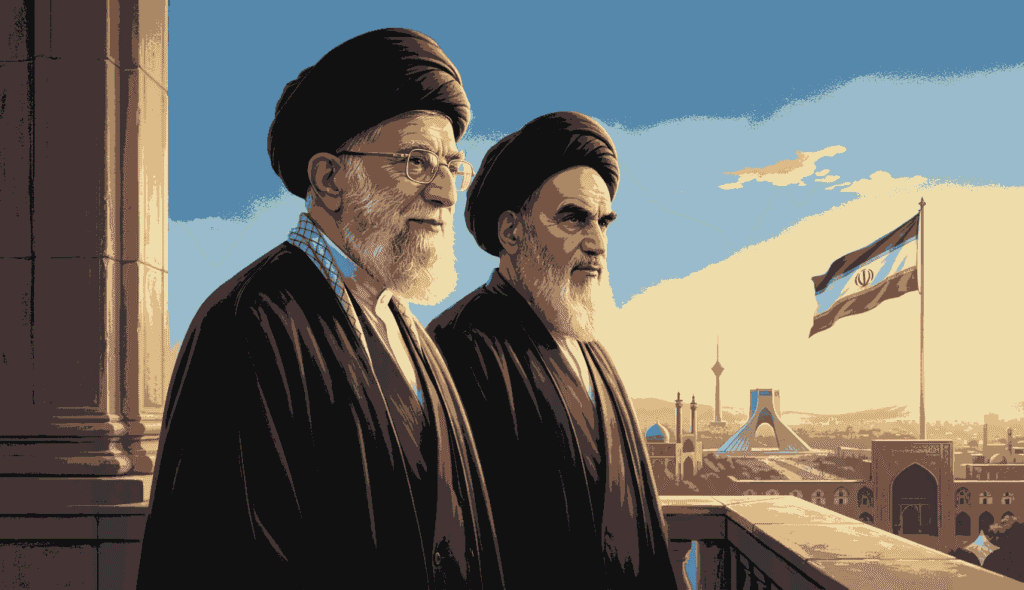
The Supreme Leader’s Power Structure
Understanding Ayatollah Ali Khamenei requires understanding the role of the Supreme Leader.
Unlike a typical head of state, the Supreme Leader holds ultimate authority over:
- The armed forces
- The judiciary
- State broadcasting
- Key economic foundations
- The Islamic Revolutionary Guard Corps (IRGC)
- Appointment of senior clerical and political figures
While Iran has a president and parliament, strategic decisions — particularly regarding defense and foreign policy — ultimately fall under Khamenei’s authority.
Over time, he strengthened parallel institutions loyal directly to him, ensuring that power remained centralized even during periods of domestic unrest.
Consolidating Control Over the IRGC
One of the most critical aspects of Ayatollah Ali Khamenei’s leadership has been his relationship with the Islamic Revolutionary Guard Corps.
The IRGC evolved from a revolutionary militia into a powerful military, economic, and political force. Under Khamenei’s leadership, it expanded its:
- Ballistic missile program
- Drone warfare capabilities
- Cyber operations
- Regional proxy networks
Today, the IRGC plays a decisive role in shaping Iran’s foreign policy and military posture across the Middle East.
This transformation enabled Iran to pursue asymmetric warfare strategies — confronting stronger military powers without direct large-scale conventional war.
Defiance of the West: Ideology and Strategy
Ayatollah Ali Khamenei has consistently framed relations with the United States and Western powers as ideological confrontation rather than temporary political disagreement.
He has repeatedly referred to the United States as a hostile force seeking regime change in Iran. In return, multiple U.S. administrations have labeled Iran a destabilizing actor in the region.
This ideological divide intensified after:
- The 2003 Iraq War
- Sanctions targeting Iran’s nuclear program
- The 2018 U.S. withdrawal from the Joint Comprehensive Plan of Action (JCPOA)
- Expanded economic restrictions on Iranian oil exports
Khamenei’s response was not capitulation — it was recalibration.
He advanced what Iranian officials describe as a “resistance economy,” aimed at reducing dependency on Western financial systems and strengthening domestic production.
The Nuclear Question and Strategic Patience
The Iranian nuclear program remains one of the most contentious issues in global diplomacy.
Under Khamenei’s leadership, Iran entered negotiations that led to the 2015 nuclear agreement. However, after the United States withdrew from the deal in 2018, Iran gradually reduced its compliance.
Rather than immediate escalation, Khamenei’s strategy reflected patience. Iran expanded uranium enrichment levels incrementally while avoiding direct full-scale confrontation.
This approach allowed Tehran to:
- Increase bargaining leverage
- Avoid triggering immediate war
- Maintain strategic ambiguity
The result: sustained tension without open conflict.
Proxy Warfare and Regional Influence
Ayatollah Ali Khamenei’s doctrine of “forward defense” reshaped Middle Eastern geopolitics.
Rather than fight wars on Iranian soil, Tehran expanded influence through allied groups in:
- Lebanon
- Iraq
- Syria
- Yemen
- Gaza
This network created layered deterrence. Any direct strike on Iran could trigger regional retaliation through multiple fronts.
Critics argue this approach fuels instability. Supporters claim it prevents invasion by raising the cost of military action against Iran.
Regardless of perspective, the strategy fundamentally altered regional power balances.
Sanctions, Survival, and Economic Pressure
Since 1979, Iran has faced waves of sanctions. Under Khamenei, the country endured some of the most severe economic restrictions in modern history.
Oil exports declined sharply after 2018 sanctions. Currency devaluation and inflation created domestic pressure.
Yet the system did not collapse.
Khamenei’s governance relied on:
- Strategic alliances with China and Russia
- Alternative trade mechanisms
- Expansion of domestic manufacturing
- Control over key economic sectors
The resilience of this structure surprised many Western analysts who predicted rapid destabilization.
Domestic Challenges and Control
Ayatollah Ali Khamenei’s tenure has not been without internal challenges.
Iran has experienced waves of protests, particularly over economic hardship and social restrictions. These moments tested the stability of the Islamic Republic.
In response, the leadership strengthened:
- Security enforcement
- Information control
- Legal oversight mechanisms
While critics describe this as repression, officials frame it as preserving national security against foreign interference.
The long-term sustainability of this model remains a key question for observers.
A Leadership Style Defined by Caution
Unlike more charismatic revolutionary figures, Ayatollah Ali Khamenei operates with calculated restraint.
He rarely engages in dramatic public gestures. Instead, his leadership style emphasizes:
- Strategic patience
- Institutional loyalty
- Long-term positioning
- Avoidance of direct war with major powers
This cautious approach has kept Iran from large-scale conventional war for decades — despite repeated crises.
Why Ayatollah Ali Khamenei Matters Globally
The influence of Ayatollah Ali Khamenei extends beyond Iran’s borders.
His decisions affect:
- Energy markets
- Maritime security in the Persian Gulf
- Nuclear non-proliferation efforts
- U.S.–Middle East relations
- Israeli security calculations
Any shift in Iran’s leadership structure could trigger internal competition among clerical authorities, security institutions, and political elites.
That uncertainty alone makes his role central to global stability.
Is Iran’s System Built to Outlast Him?
Perhaps the most critical question surrounding Ayatollah Ali Khamenei is succession.
The Islamic Republic’s structure is designed to continue beyond any single leader. However, transitions carry risk.
A sudden power vacuum could:
- Intensify factional rivalries
- Alter foreign policy tone
- Shift regional alliances
Or it could reinforce hardline continuity.
The future of Iran — and its relationship with the West — may hinge on how that transition unfolds.
Conclusion: The Architecture of Resistance
Ayatollah Ali Khamenei did not simply inherit power.
He reshaped Iran’s political and military architecture to withstand external pressure and internal strain. Through institutional consolidation, proxy networks, and strategic patience, he constructed a state designed to endure.
Whether viewed as a defender of sovereignty or a source of regional tension, his impact on global geopolitics is undeniable.
Understanding Ayatollah Ali Khamenei means understanding modern Iran — and the evolving balance of power between Tehran and the West.
Frequently Asked Questions (FAQ)
Who is Ayatollah Ali Khamenei?
Ayatollah Ali Khamenei is the Supreme Leader of Iran, serving since 1989. He holds ultimate authority over Iran’s military, judiciary, and major policy decisions.
How long has Ayatollah Ali Khamenei been in power?
He has been Supreme Leader since June 1989, making him one of the longest-serving heads of state in the world.
What is Ayatollah Ali Khamenei’s stance toward the West?
He has consistently taken a critical stance toward U.S. and Western policies, advocating resistance against foreign pressure while avoiding direct large-scale war.
What role does he play in Iran’s military strategy?
Khamenei oversees Iran’s armed forces and the IRGC, shaping missile programs, drone development, and regional proxy strategy.
Why is Ayatollah Ali Khamenei important globally?
His decisions influence Middle Eastern security, global energy markets, nuclear diplomacy, and international military balance.
Documentary Times
For deeper geopolitical analysis and investigative reporting, explore more expert coverage at Documentary Times.